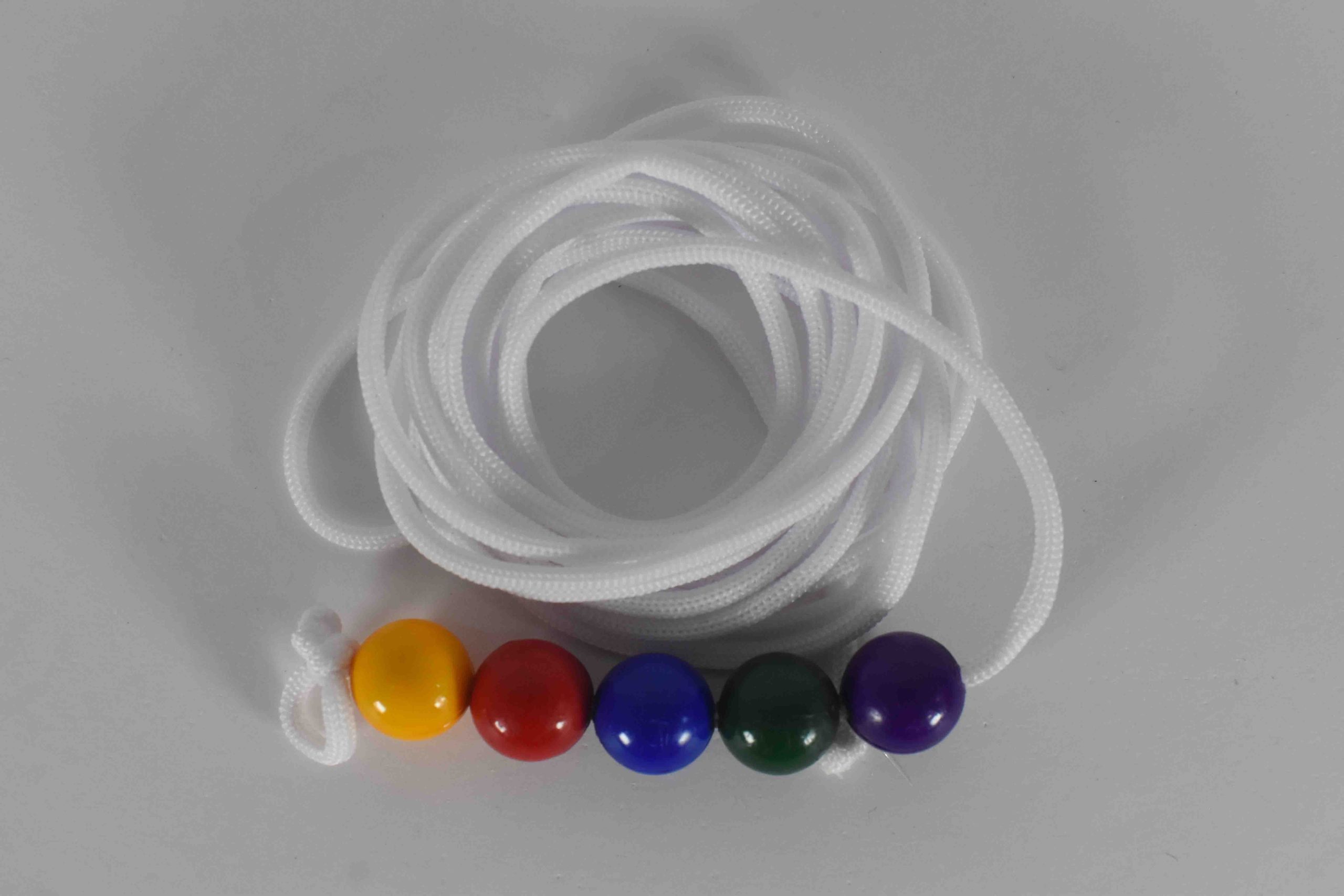
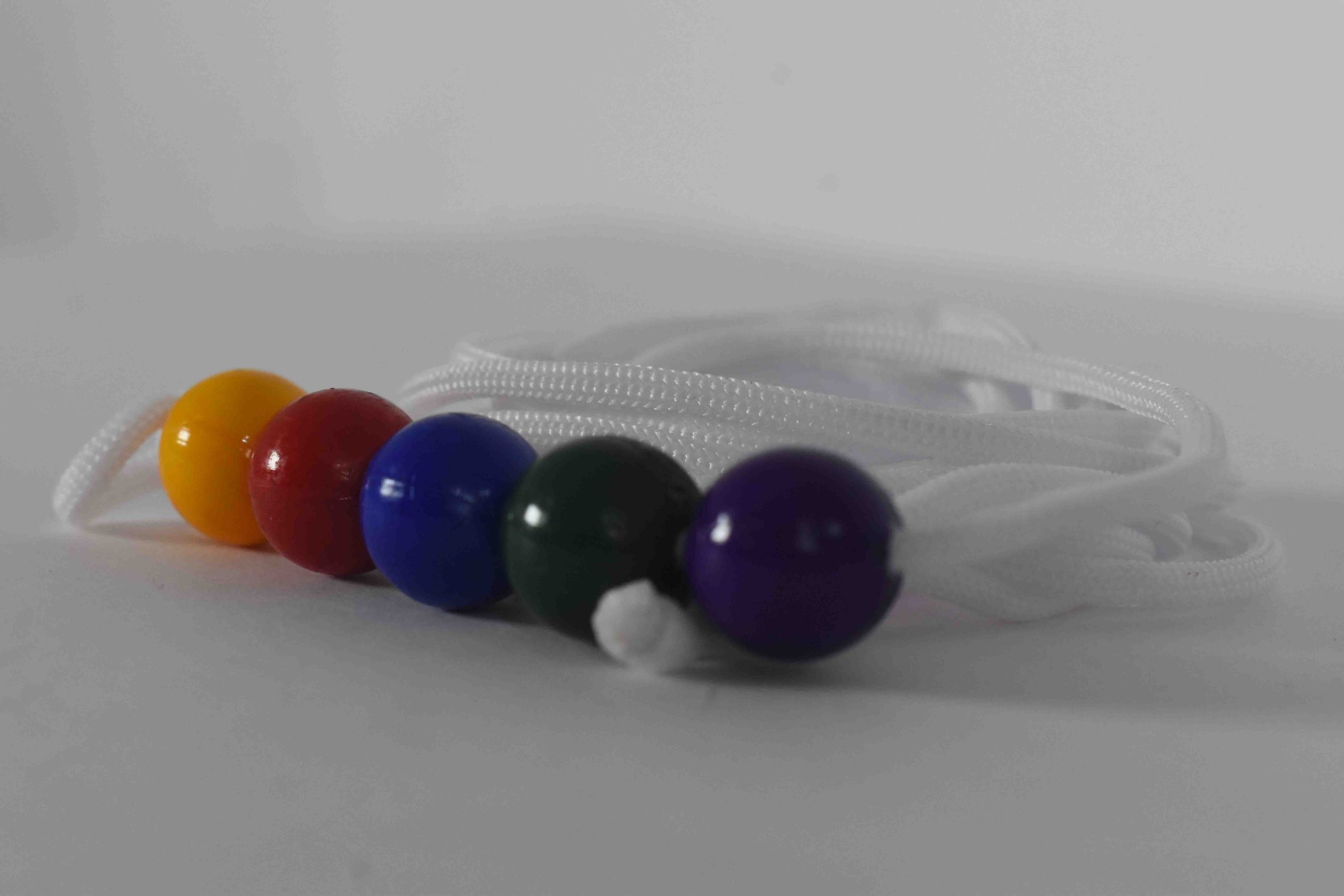
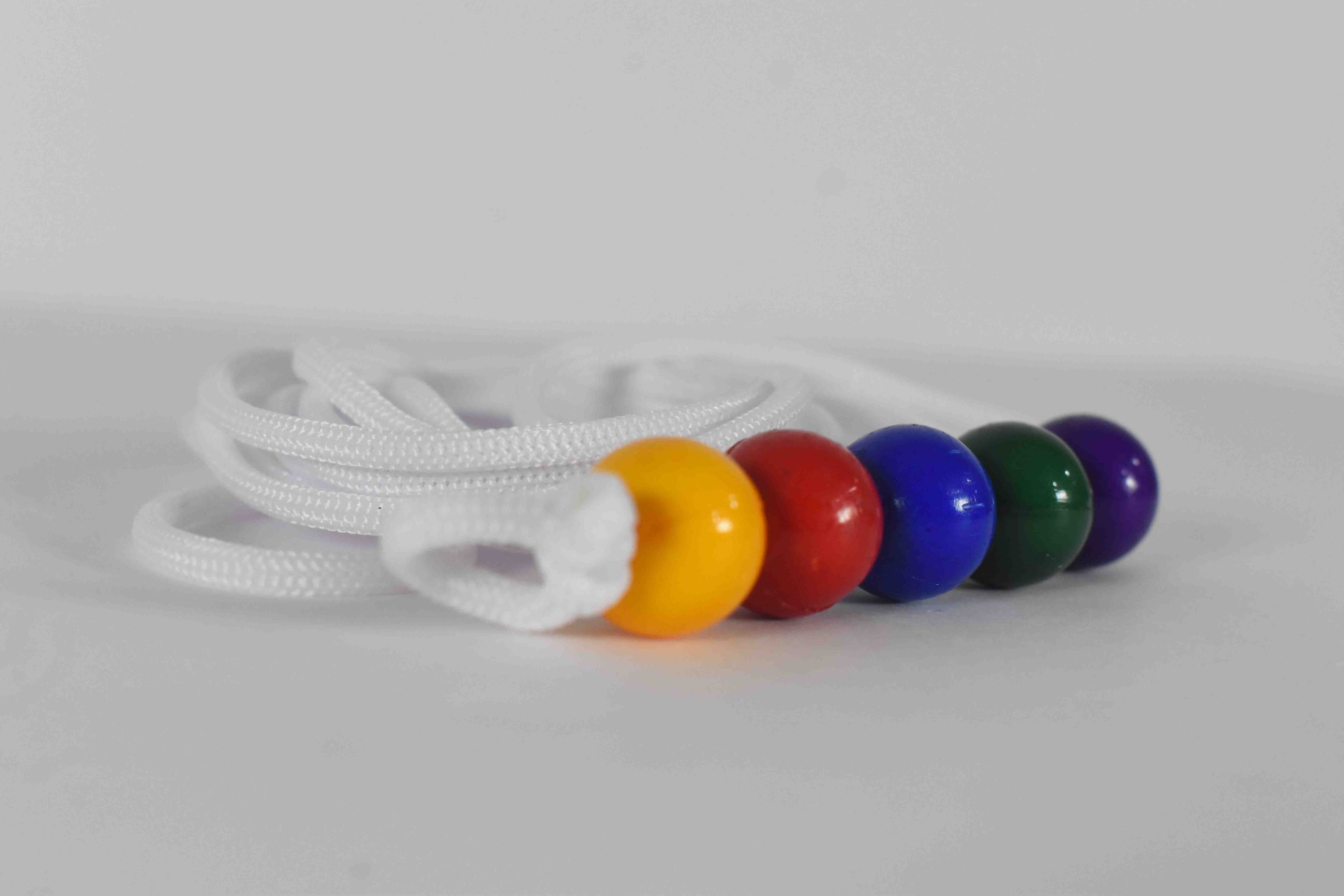
Brock String with 5 Beads – 10ft
The Brock String is a simple string with colored beads used to train convergence, eye-teaming, and anti-suppression—patients learn to keep a single bead clear while seeing a correct “X” pattern of the string. It’s a fast, repeatable drill for clinic or home programs to build vergence range, recovery, and stability at different working distances.
Product Code: JVBS510
What it trains: Convergence range & recovery, binocular alignment, suppression awareness
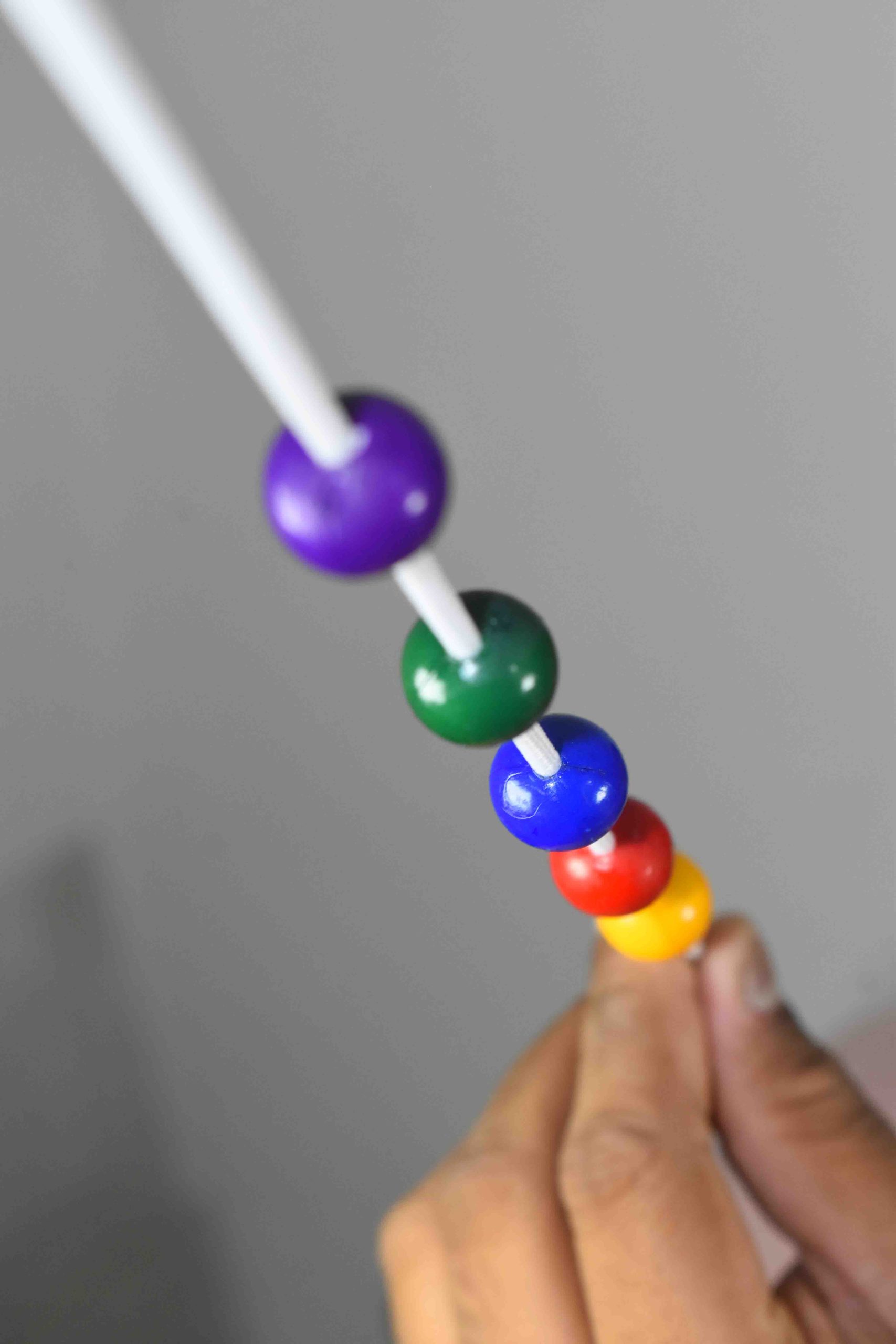
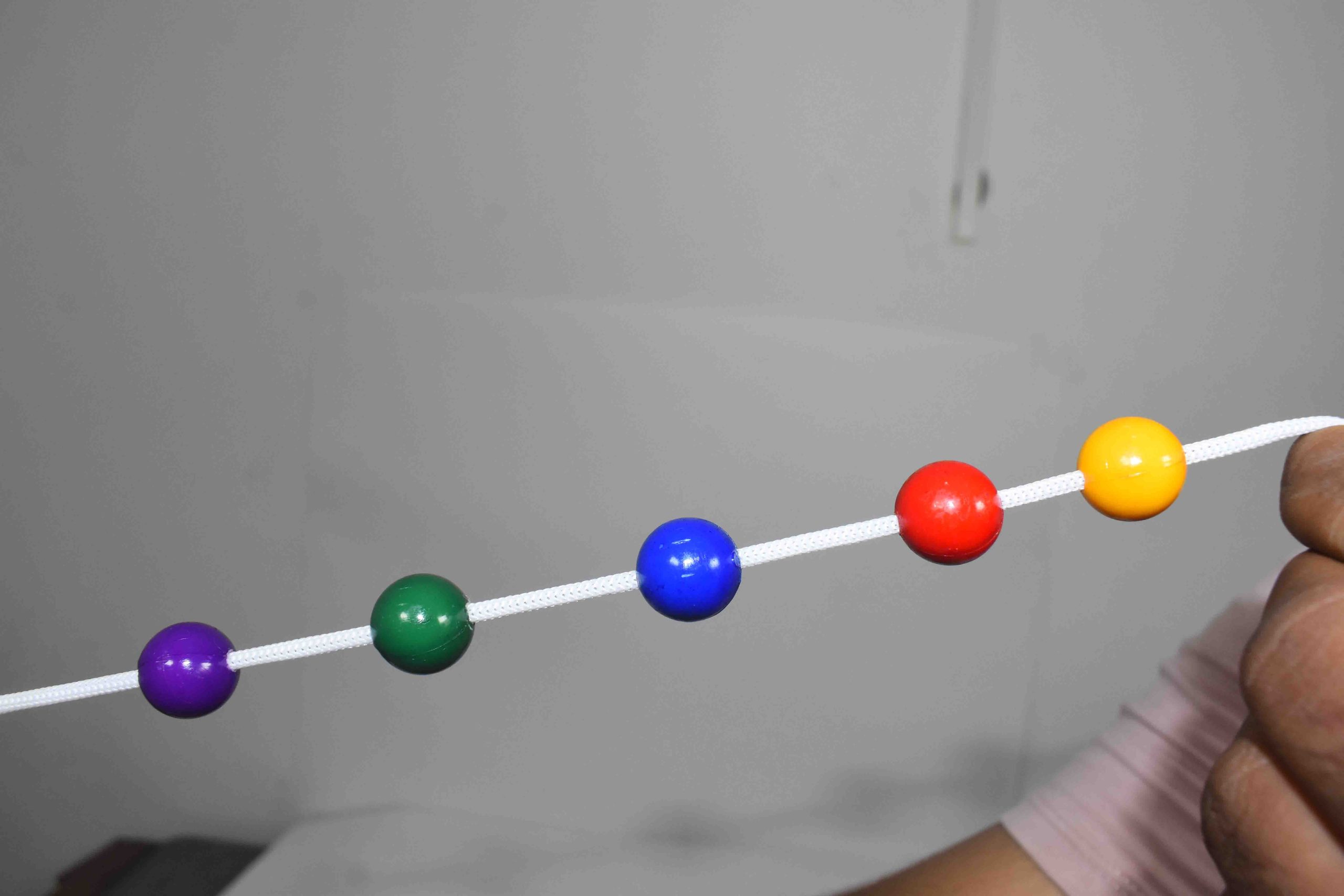
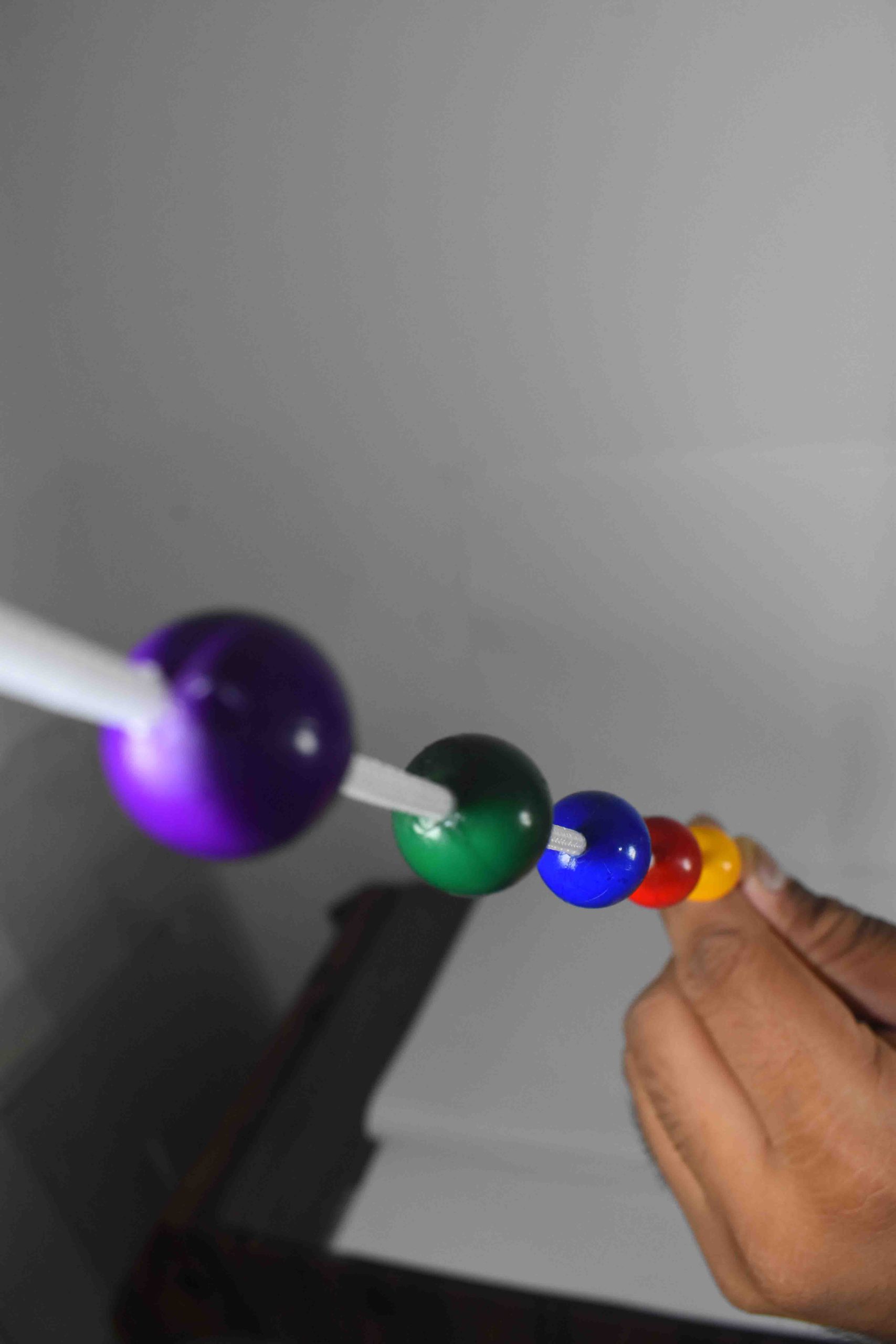
How to use (quick start): Fix one end at nose → place beads at near/mid/far → look at a bead → confirm X-pattern and single, clear bead → shift to another bead
Progressions: Start with larger spacing → move beads closer (increase demand) → add timing (reps/min), alternate near↔far, or incorporate ± flippers
Feedback cues: Correct X at the target bead; if one side of the “X” disappears, that eye is suppressing; if the bead doubles, reduce demand and rebuild
Who it suits: Children to adults; ideal for convergence insufficiency workups, VT programs, and sports-vision warmups
Great pairings: Barrel/dot convergence cards, Red-Green bar reader (to monitor suppression), fixation stick or metronome for pacing
Session tips: Keep posture steady, breathe and blink normally; log reps, time, break/recovery to track progress week-to-week
Care: Keep the string untangled and clean; store the beads snug on the cord; avoid sharp bends to preserve alignment and visibility
| Sr No | Topic | Description |
|---|---|---|
| 1 | Category | Vision Therapy |
| 2 | Material | Beads: Durable plastic beads in different colors for easy visual identification. String: Strong nylon cord, typically white to provide high contrast with the beads. The cord is flexible yet firm enough to maintain tension during therapy exercises. |
| 3 | Item Weight | Lightweight design, making it easy to carry and suitable for repeated use during therapy sessions. |
| 4 | Length | The Brock String is typically available in lengths ranging from approximately 5 to 15 feet (1.5–4.5 meters) depending on the therapy requirement. Different lengths allow clinicians to adjust the difficulty level and training distance. |
| 5 | How to Use | One end of the string is placed at or near the patient’s nose while the other end is fixed to a stationary point such as a wall, door handle, or held by another person. Colored beads are positioned along the string at various distances. When the patient focuses on a bead, the bead should appear single and clear, while the string appears as two lines forming an “X” pattern at the fixation bead. This visual feedback helps monitor eye alignment and binocular coordination. |
| 6 | Included Components | The product typically includes a nylon string and multiple movable colored plastic beads that can be repositioned along the cord to adjust training difficulty. |
| 7 | Purpose | The Brock String is used to develop binocular vision skills, particularly convergence control, eye teaming, and suppression awareness. It is widely used in vision therapy programs to help treat convergence insufficiency, binocular coordination problems, strabismus, and certain cases of amblyopia. |
| 8 | Bead Diameter | Beads typically measure approximately 1.5–2.0 cm in diameter, large enough to be easily visible during fixation exercises. |
| 9 | Durability | Constructed with durable nylon cord and sturdy plastic beads, allowing repeated clinical or home therapy use. The materials are easy to clean and designed to maintain consistent tension and bead movement along the string. |
| 10 | Unique Selling Proposition (USP) | The Brock String provides instant visual feedback, allowing patients and clinicians to easily observe whether the eyes are properly aligned. It is a simple, cost-effective, and portable tool that requires no electricity and can be used both in clinics and for supervised home therapy exercises. |
| 11 | Additional Advantages | The device is user-friendly, adjustable for different therapy levels, and widely recognized in vision therapy practice. Its simple design makes it ideal for teaching patients how binocular vision and convergence work while tracking improvement during therapy. |
Related products
-
Accomodation, Vision Therapy
Hendrickson Lifesaver Card White Single
The Hendrickson Life Saver Cards – White are opaque free-fusion targets with high-contrast “lifesaver” rings that train vergence (convergence/divergence), stereo awareness, and anti-suppression—all without special glasses. The solid white backing boosts visibility and reduces background distractions, making fusion easier for beginners while you vary spacing/orientation to build range and facility.
Product Code: JVHLW
SKU: JVHLW -
Flipper, Vision Therapy
Confirmation Flipper -/+2.00D
The Confirmation Flipper ±2.00 D is a near-vision lens flipper for training and verifying accommodative facility, challenging patients to switch focus quickly and accurately at a slightly higher demand than ±1.50. It’s ideal for timed near tasks (letters/words) to record cycles per minute (CPM) and track improvements in clinic or supervised home programs.
Product Code: JVCF Flipper
SKU: JVCF2.00