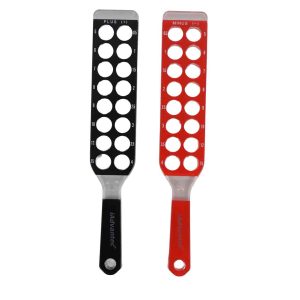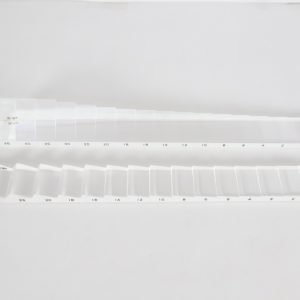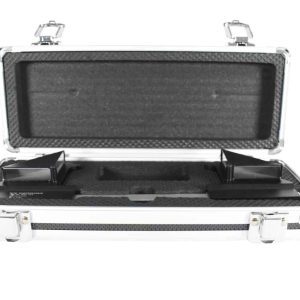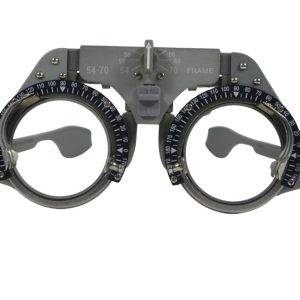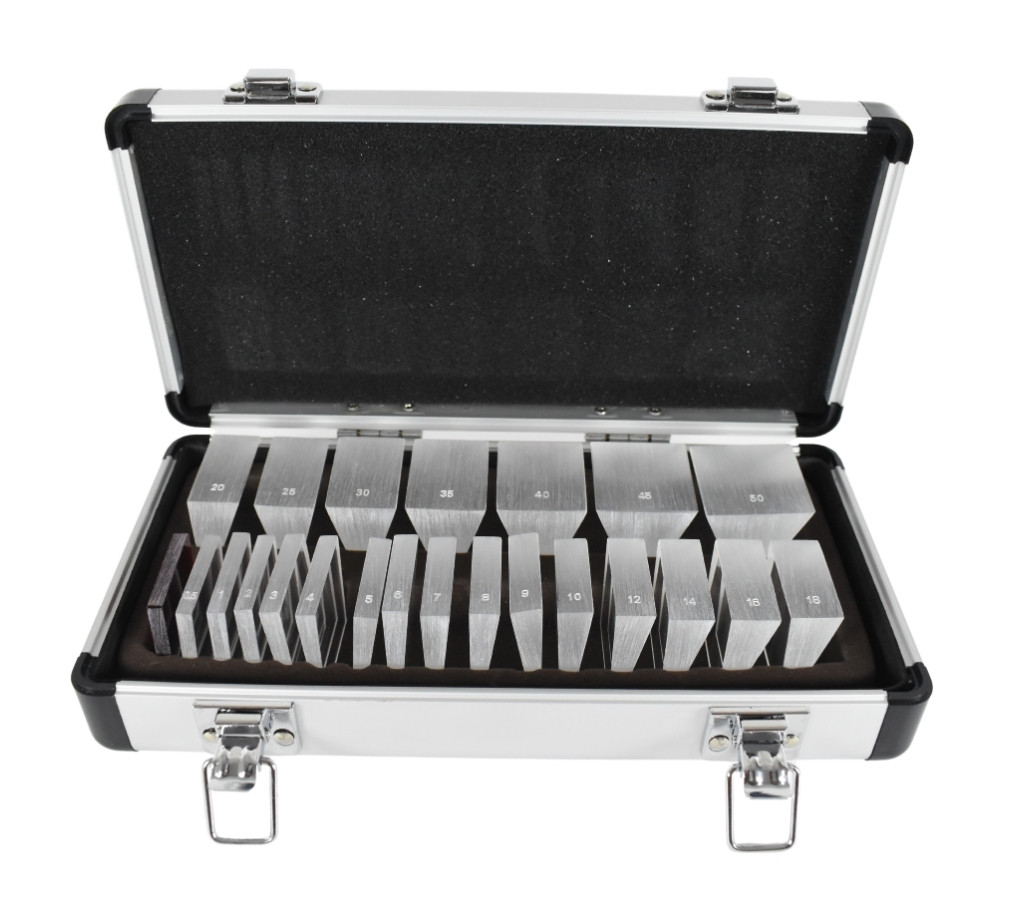
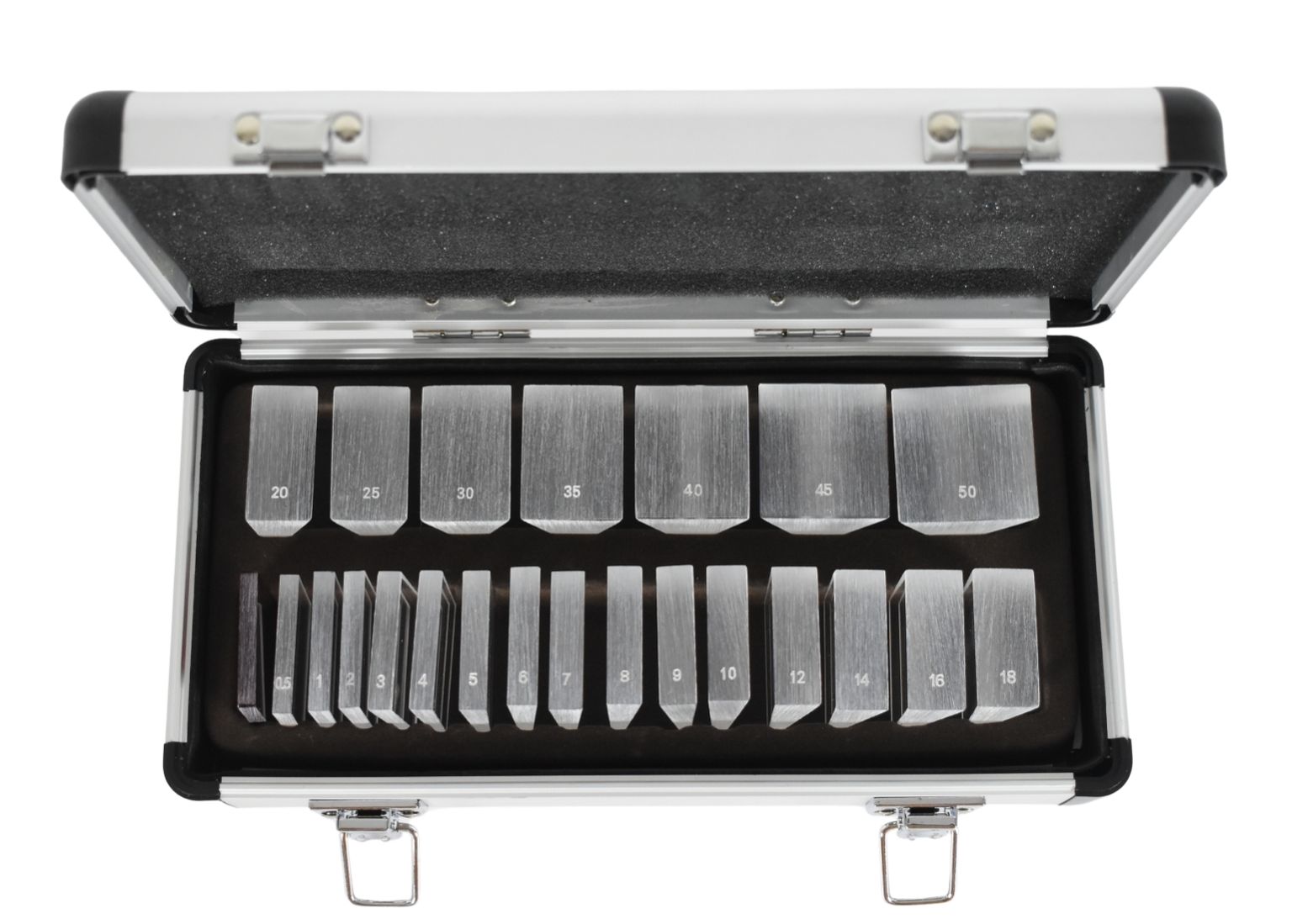
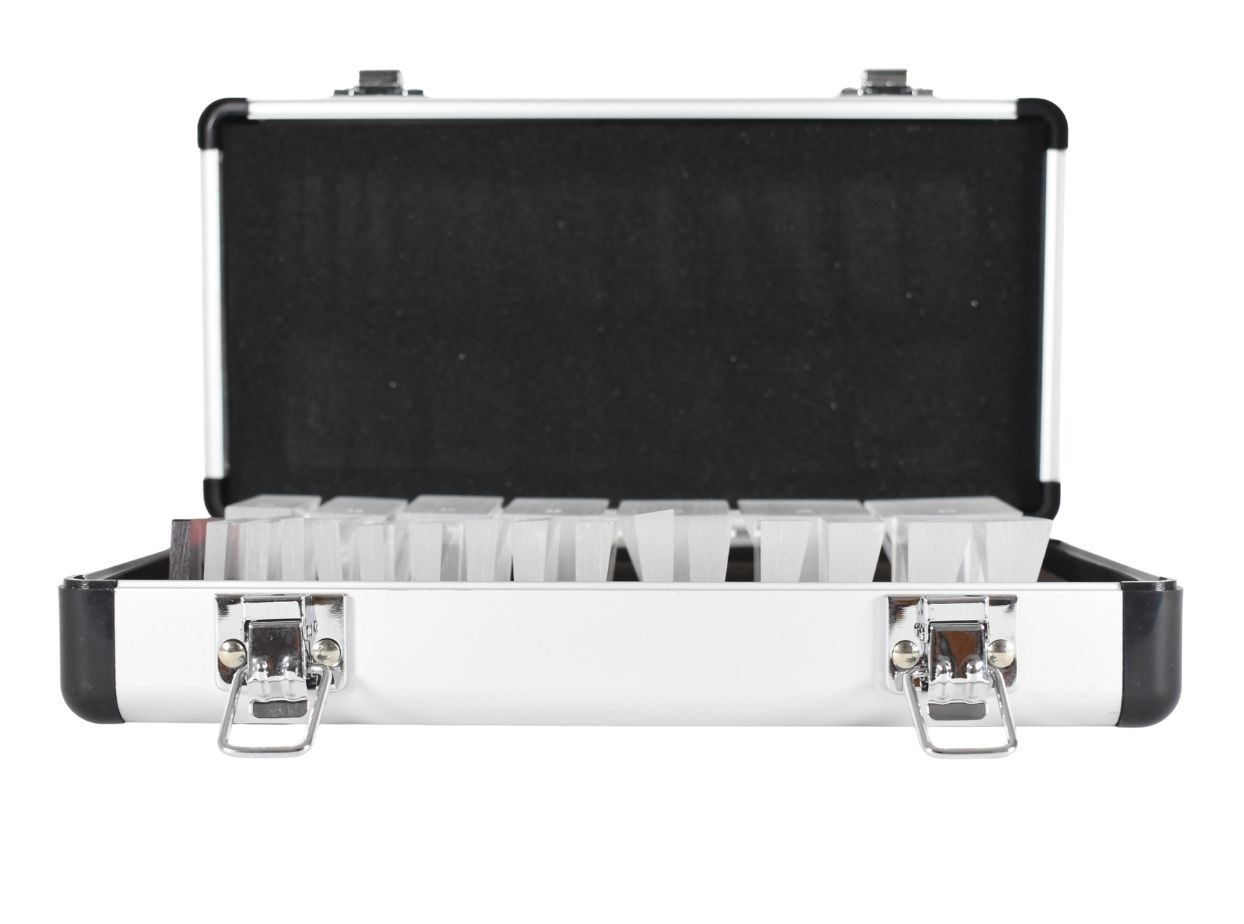
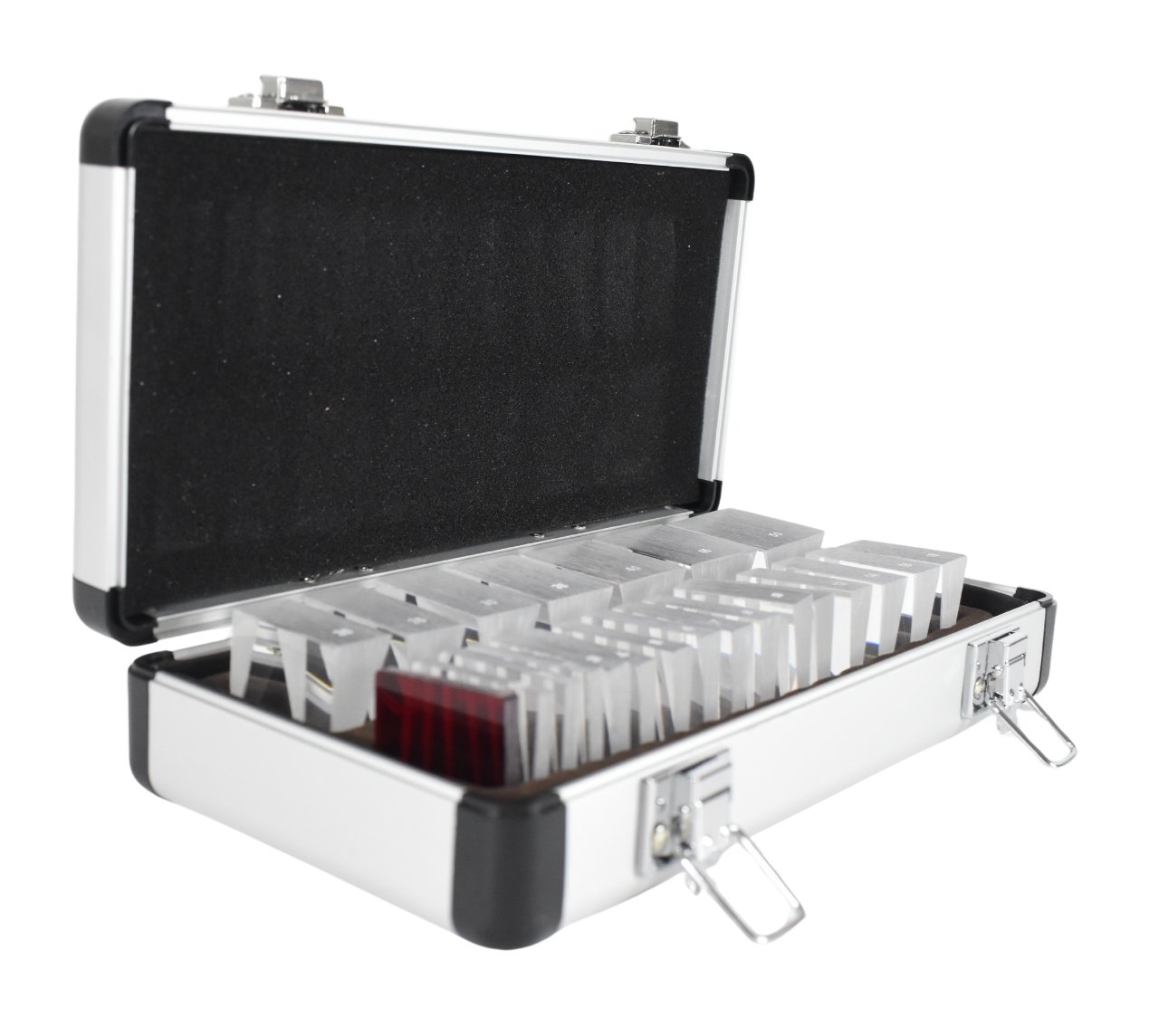
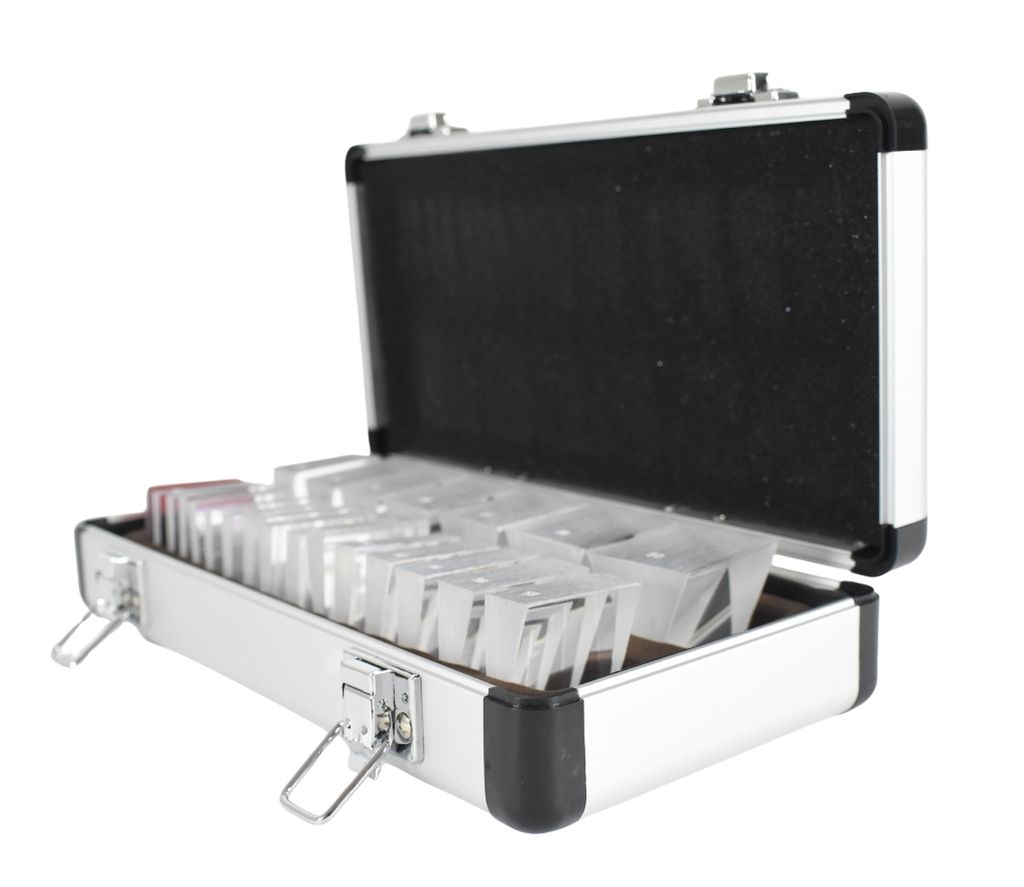
Loose Prism Set of 22 pcs
The Loose Prism Set (22 pcs) is a calibrated collection of handheld prisms for measuring and training ocular alignment—ideal for cover test prism neutralization, quantifying horizontal/vertical deviations, and checking fusional reserves. Clearly marked bases and durable, polished optics make quick BI/BO/BU/BD assessments easy at the slit lamp, phoropter, or in vision therapy, and the set stores neatly in a protective case.
Product Code: JVLP22
What it’s for: Prism neutralization on cover tests, quantifying deviations, checking BO/BI reserves, vertical workups, and VT progress checks
Kit makeup: 22 calibrated prisms spanning low-to-high powers for fine steps and larger shifts; each with clear base orientation markings
Clinical speed: Grab-and-go pieces for quick stacking/alternation without changing phoropter settings
Where it works: Chairside, slit lamp, or in trial frames; equally useful in pediatric and adult exams
Readability: Etched/printed diopter values and base arrows for confident, repeatable measurements
VT use: Train convergence/divergence and vertical compensation; document break/recovery and symptom changes
Good practices: Keep the apex-to-base orientation correct; center over the visual axis; avoid touching optical faces
Care: Clean with lens-safe solution and a soft cloth; store in the lined case to prevent scratches and keep calibration pristine
| Sr No | Topic | Description |
|---|---|---|
| 1 | Catagory | Examination Tools |
| 2 | Purpose | Used to measure and treat eye alignment problems like crossed or wandering eyes. |
| 3 | Prism Powers | Has many prisms with different strengths so you can test small to large eye deviations. |
| 4 | Material | Made from clear, strong acrylic prisms and kept safe in a sturdy plastic case with soft padding. |
| 5 | Dimensions | Each prism is about 37 mm square — easy to handle and use. |
| 6 | Weight | The whole set is light enough to carry around comfortably. |
| 7 | Durability | Built to last with strong materials, good for everyday clinical use. |
| 8 | USP | Offers a complete set of prism powers all in one case, handy and versatile. |
| 9 | Storage | Foam-lined case keeps prisms organized and protected during travel. |
| 10 | Vision Therapy Use | Helps eye doctors diagnose and treat vision problems related to how eyes work together. |
| 11 | Compatibility | Works well with other vision therapy tools for flexible treatment options. |
Related products
-
Examination Tools, Lenses and Filter
Retinoscopy Lens Racks
The Retinoscopy Lens Rack is an organized holder for commonly used retinoscopy lenses, allowing fast, one-handed lens changes during objective refraction. It improves exam efficiency and accuracy by keeping lenses clearly visible, securely positioned, and immediately accessible at the chairside.
Product Code: JVRLR
SKU: JVRLR -
Examination Tools, Prism
Horizontal and Vertical Prism Bar Set
The Prism Bar Set provides stepped, clearly marked prism powers in easy-grip bars so you can quickly perform cover-test neutralization, quantify deviations, and assess fusional reserves at distance or near. Available in horizontal (BI/BO) and vertical (BU/BD) configurations, it streamlines pediatric and adult measurements at the chair, slit lamp, or with trial frames.
Product Code: JVPHLV
SKU: JVPHLV -
Examination Tools, Exophthalmometer
Hertel Exophthalmometer
The Hertel Exophthalmometer is a precision instrument used to measure eye protrusion (proptosis/exophthalmos) by comparing the position of each globe relative to the lateral orbital rim. It’s essential for thyroid eye disease, orbital pathology, trauma follow-up, and serial monitoring, providing quick, repeatable measurements at the chairside.
Product Code: JVHEX
SKU: JVHEX -
Examination Tools, Trial Frame and Lens Set
Adult Titanium Trial Frame
The Adult Titanium Trial Frame is a lightweight, rigid, and highly adjustable refraction frame that keeps trial lenses precisely centered for accurate, comfortable exams. It accepts standard 38 mm lenses (typically up to 4 per eye) and offers smooth controls for independent PD, lens height/tilt, and 0–180° axis alignment to speed up reliable power changes.
Product Code: JVTFTA
SKU: JVTFTA