Confirmation Flipper -/+2.00D
The Confirmation Flipper ±2.00 D is a near-vision lens flipper for training and verifying accommodative facility, challenging patients to switch focus quickly and accurately at a slightly higher demand than ±1.50. It’s ideal for timed near tasks (letters/words) to record cycles per minute (CPM) and track improvements in clinic or supervised home programs.
Product Code: JVCF Flipper
What it trains/tests: Speed and accuracy of focus shifts (accommodation); can be paired with binocular checks for binocular facility
Why ±2.00 D: Adds a stronger focusing demand than ±1.50 D—useful once a basic level of facility is established
Quick start: Sit at ~40 cm with a standard near target → clear through +2.00 → flip to −2.00 and clear → continue for a timed trial; record CPM
Best practices: Keep target size/contrast and lighting consistent; coach clear & single before each flip; log CPM + symptoms (effort, blur, headache)
Who it suits: Older children, teens, and adults progressing beyond beginner levels; clinic and home VT with clinician guidance
Great pairings: Hart chart or reading strips for standardized text; add RG bar reader/Brock string when integrating binocular blocks
Build & care: Lightweight, balanced handle for smooth flipping; clean with lens-safe solution and store in a protective pouch to prevent scratches
| Sr No | Topic | Description |
|---|---|---|
| 1 | Category | Vision Therapy / Accommodation Testing |
| 2 | Product Name | Confirmation Flipper ±2.00 |
| 3 | Purpose | Used to test and train accommodative facility — the ability of the eyes to quickly and accurately change focus from one lens demand to another. |
| 4 | Target Users | Optometrists, ophthalmologists, orthoptists, vision therapists, pediatric clinics, binocular vision practices, and patients doing supervised home therapy. |
| 5 | Optical Power | =+2.00D / -2.00D spherical lenses |
| 6 | How It Works | The patient looks at a near target and flips between the plus and minus lenses, clearing the target each time. This trains the eyes to stimulate and relax accommodation efficiently. |
| 7 | Common Clinical Uses | Accommodative facility testing, accommodative rock therapy, positive/negative relative accommodation support, hyperopia screening support, and lens demonstration. |
| 8 | Testing Distance | Typically used at 40 cm (16 inches) with a near target or reading card. Many standard accommodative flipper protocols use near testing at this distance. (bernell.com) |
| 9 | Optotypes / Symbols | The flipper itself does not include optotypes. It is used with near reading targets, accommodative charts, Hart charts, or printed therapy cards. |
| 10 | Material | Frame / Handle: Durable molded plastic or ABS-style body. Lenses: Usually optical glass lenses in professional-grade models; some economy models may use optical plastic. Bernell specifically lists glass lenses; Gulden notes shatterproof durable lenses in their flipper sets. (bernell.com) |
| 11 | Lens Type | Spherical confirmation lenses mounted in flip format |
| 12 | Lens Diameter | Commonly around 37–38 mm in many standard clinical flippers (varies slightly by manufacturer/model). |
| 13 | Physical Design | Handheld dual-sided flipper with one plus side and one minus side, clearly marked for easy identification. |
| 14 | Dimensions | Approximate overall size varies by brand, but typical flippers are compact and designed for easy one-hand use in clinic or home therapy. |
| 15 | Weight | Lightweight and portable; generally around 40–70 g, depending on frame and lens material. |
| 16 | Mounting / Usage | Handheld. Used directly in front of the patient’s eyes during accommodative exercises or testing. |
| 17 | Included Accessories | Usually supplied as single flipper unit only; some sets or kits may include charts, holders, or storage case depending on packaging. Good-Lite includes a ±2.00 flipper in its home VT kit. (Good-Lite Co) |
| 18 | Durability | Designed for frequent clinical and therapy use. Glass-lens professional flippers offer better optical clarity, resistance to yellowing, and long-term durability. (bernell.com) |
| 19 | Usability | Easy to carry, easy to clean, and simple to use in both clinic and home therapy programs. |
| 20 | Marker of Quality | Good quality flippers have clear power markings, low distortion optics, durable handle construction, and smooth lens mounting. Professional brands often use glass optics for better long-term performance. (bernell.com) |
| 21 | Clinical Importance | ±2.00 is one of the most commonly prescribed powers for accommodative facility work and is widely used in standard vision therapy routines. (Gulden Ophthalmics) |
Related products
-
Accomodation, Vision Therapy
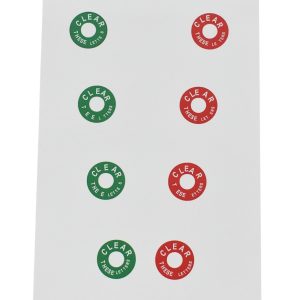
Hendrickson Lifesaver Card White Single
The Hendrickson Life Saver Cards – White are opaque free-fusion targets with high-contrast “lifesaver” rings that train vergence (convergence/divergence), stereo awareness, and anti-suppression—all without special glasses. The solid white backing boosts visibility and reduces background distractions, making fusion easier for beginners while you vary spacing/orientation to build range and facility.
Product Code: JVHLW
SKU: JVHLW -
Vision Therapy
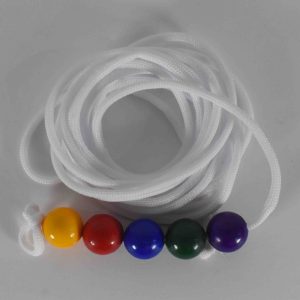
Brock String with 5 Beads – 10ft
The Brock String is a simple string with colored beads used to train convergence, eye-teaming, and anti-suppression—patients learn to keep a single bead clear while seeing a correct “X” pattern of the string. It’s a fast, repeatable drill for clinic or home programs to build vergence range, recovery, and stability at different working distances.
Product Code: JVBS510
SKU: JVBS510