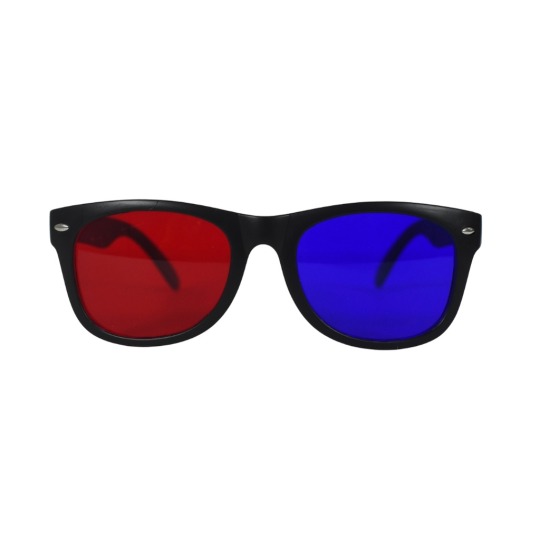
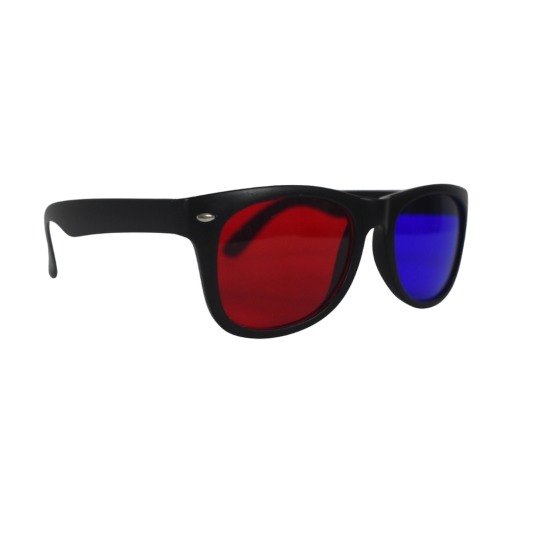
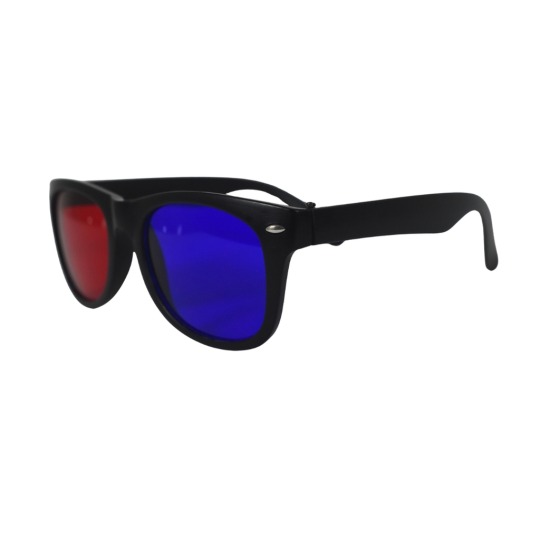
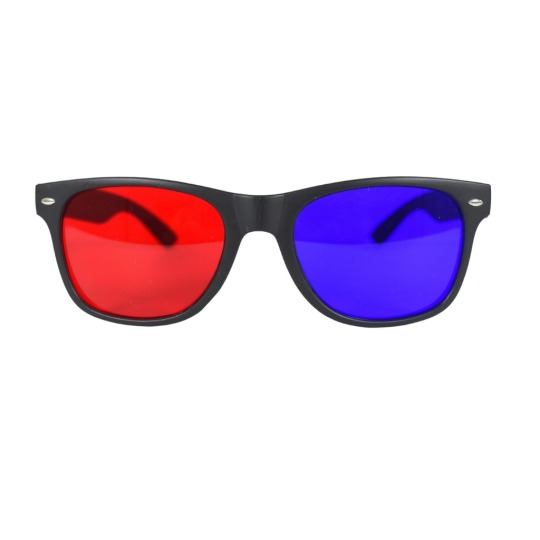
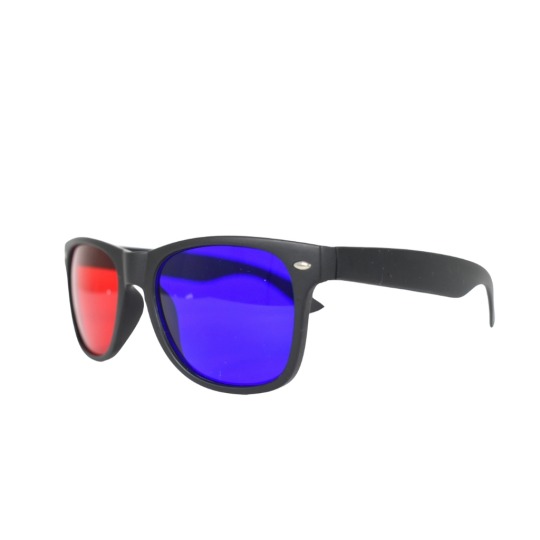
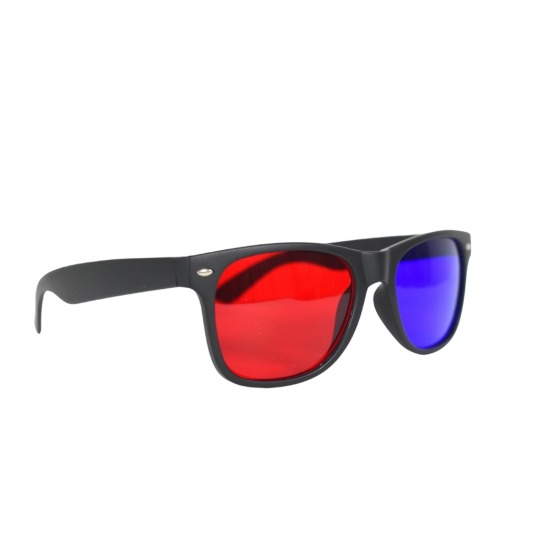
Red Blue Glasses
Red–Blue 3D Anaglyph Glasses are specialized therapeutic glasses used in binocular vision therapy to separate visual stimuli between the two eyes. They enable dichoptic training and stereoscopic perception, helping improve binocular coordination, suppression control, and depth perception.
Product Code: JVRB
This separation of images, known as anaglyph viewing, allows clinicians to present different images to each eye simultaneously. When the patient wears the glasses and views compatible charts or therapy cards, the brain must combine both images to perceive the full visual scene. This process helps stimulate binocular fusion and stereopsis (depth perception).
These glasses are often used with 3D vision therapy charts, anaglyph stereo cards, fusion training exercises, and anti-suppression therapy materials. They are particularly useful for patients with amblyopia (lazy eye), suppression, convergence insufficiency, or binocular vision disorders.
Because of their lightweight design and simple optical principle, Red–Blue Anaglyph Glasses are widely used in both clinical therapy sessions and home vision therapy programs, making them a versatile and effective tool for binocular vision rehabilitation.
| Sr No | Topic | Description |
|---|---|---|
| 1 | Category | Vision Therapy / Binocular Vision Training |
| 2 | Purpose | Used for dichoptic vision therapy exercises to separate visual input between the two eyes, improving binocular fusion, stereopsis, and anti-suppression training. |
| 3 | Target Users | Optometrists, ophthalmologists, orthoptists, vision therapists, pediatric clinics, and patients undergoing binocular vision therapy. |
| 4 | Optical Principle | Based on anaglyph stereoscopic viewing, where red and blue filters allow each eye to see different components of a visual stimulus, creating a binocular fusion effect. |
| 5 | Lens Colors | One Red filter lens and one Blue filter lens designed for dichoptic separation of images. |
| 6 | Material | Frame: Lightweight plastic / ABS frame. Lenses: Colored acetate or optical plastic filters (red and blue). |
| 7 | Frame Design | Comfortable lightweight frame suitable for both children and adults during therapy sessions. |
| 8 | Weight | Lightweight (approximately 10–20 g, depending on model). |
| 9 | Dimensions | Approximate frame width 13–14 cm; lens diameter 4–5 cm depending on design. |
| 10 | Compatibility | Compatible with 3D anaglyph charts, stereopsis therapy cards, binocular fusion exercises, and vision therapy software or printed materials designed for red/blue viewing. |
| 11 | Testing / Usage Distance | Typically used at near working distance (~40 cm) during therapy exercises but may also be used at intermediate distances depending on the therapy task. |
| 12 | Mounting / Usage | Worn directly by the patient while performing binocular vision therapy activities or stereopsis training. |
| 13 | Durability | Durable plastic frame with high-quality colored filters designed for repeated clinical use. |
| 14 | Usability | Lightweight, portable, and easy to use in both clinical settings and home therapy environments. |
| 15 | Marker of Quality | Widely used in vision therapy programs and compatible with professional binocular vision training systems used in optometry and orthoptic clinics. |
Related products
-
Examination Tools, Prism
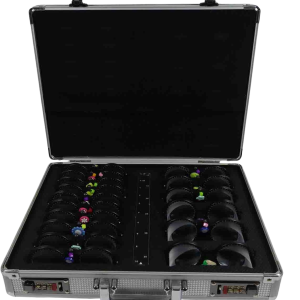
Yoked Prism 16 Pair
The Yoked Prism – 16 Pair (Flat) set provides sixteen matched prism pairs with the same power and base direction in both eyes, producing a controlled, symmetric field shift without adding fusional demand. Ideal for visual midline shift evaluations, posture/gait and spatial-orientation trials, and vision-therapy progressions, the flat, durable optics make quick chairside swaps and consistent observations easy.
Product Code: JVYP16
SKU: JVYP16 -
Examination Tools, Maddox
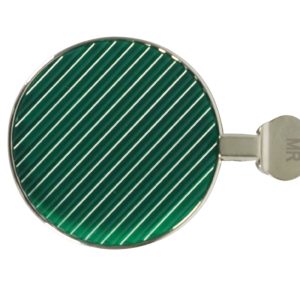
Green Maddox Lens for Trial Frames
The Green Maddox Lens (for Trial Frames) converts a point light into a bright green line to reveal and measure horizontal or vertical phorias/tropias during dissociated testing. Sized for standard 38 mm trial frames, it pairs with a penlight and prism neutralization for fast, repeatable prism-diopter readings at distance or near.
Product Code: JVMLG
SKU: JVMLG -
Examination Tools, Lenses and Filter
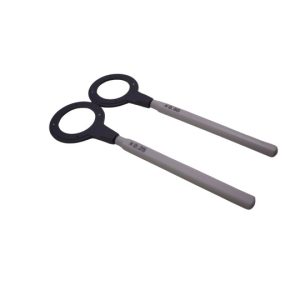
Jackson Cross Cylinder Plastic Set of 2
Jackson Cross Cylinder Plastic Set of 2 is a lightweight clinical refraction tool used for refining cylindrical power and axis during subjective refraction. The set usually includes two cross-cylinder lenses of different powers, commonly used to improve the accuracy of astigmatism correction.
Product Code: JCCP2
SKU: JCCP2 -
Examination Tools, Prism
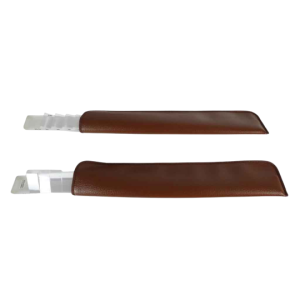
Horizontal and Vertical Prism Bar Set
The Prism Bar Set provides stepped, clearly marked prism powers in easy-grip bars so you can quickly perform cover-test neutralization, quantify deviations, and assess fusional reserves at distance or near. Available in horizontal (BI/BO) and vertical (BU/BD) configurations, it streamlines pediatric and adult measurements at the chair, slit lamp, or with trial frames.
Product Code: JVPHLV
SKU: JVPHLV