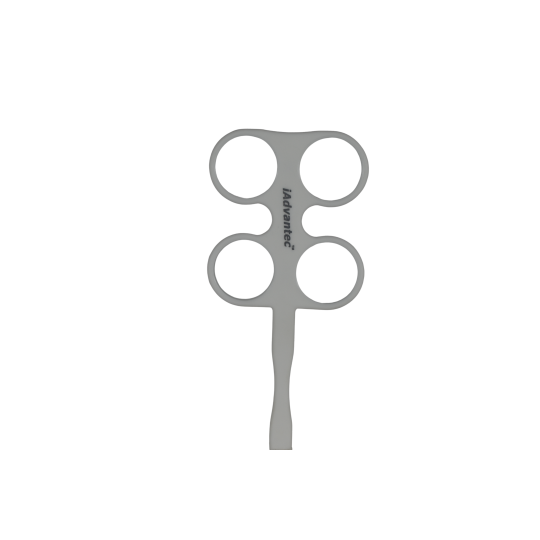
Confirmation Flipper -/+2.00D
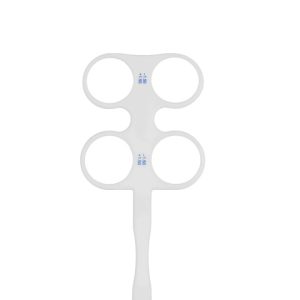
The Confirmation Flipper ±2.00 D is a near-vision lens flipper for training and verifying accommodative facility, challenging patients to switch focus quickly and accurately at a slightly higher demand than ±1.50. It’s ideal for timed near tasks (letters/words) to record cycles per minute (CPM) and track improvements in clinic or supervised home programs.
Product Code: JVCF2.00 Flipper
The Confirmation Flipper ±2.00 D is a near-vision lens flipper designed to build and verify accommodative facility at a slightly higher difficulty than common starter powers. With paired +2.00 / −2.00 lenses on a flip handle, it’s ideal for timed reading tasks to measure cycles per minute (CPM), reduce symptoms like near blur or fatigue, and document steady improvement in clinic or supervised home programs.
What it trains/tests: Speed and accuracy of focus shifts (accommodation); can be paired with binocular checks for binocular facility
Why ±2.00 D: Adds a stronger focusing demand than ±1.50 D—useful once a basic level of facility is established
Quick start: Sit at ~40 cm with a standard near target → clear through +2.00 → flip to −2.00 and clear → continue for a timed trial; record CPM
Best practices: Keep target size/contrast and lighting consistent; coach clear & single before each flip; log CPM + symptoms (effort, blur, headache)
Who it suits: Older children, teens, and adults progressing beyond beginner levels; clinic and home VT with clinician guidance
Great pairings: Hart chart or reading strips for standardized text; add RG bar reader/Brock string when integrating binocular blocks
Build & care: Lightweight, balanced handle for smooth flipping; clean with lens-safe solution and store in a protective pouch to prevent scratches
| Sr No | Topic | Description |
|---|---|---|
| 1 | Category | Vision Therapy / Accommodation Testing |
| 2 | Product Name | Confirmation Flipper ±2.00 |
| 3 | Purpose | Used to test and train accommodative facility — the ability of the eyes to quickly and accurately change focus from one lens demand to another. |
| 4 | Target Users | Optometrists, ophthalmologists, orthoptists, vision therapists, pediatric clinics, binocular vision practices, and patients doing supervised home therapy. |
| 5 | Optical Power | =+2.00D / -2.00D spherical lenses |
| 6 | How It Works | The patient looks at a near target and flips between the plus and minus lenses, clearing the target each time. This trains the eyes to stimulate and relax accommodation efficiently. |
| 7 | Common Clinical Uses | Accommodative facility testing, accommodative rock therapy, positive/negative relative accommodation support, hyperopia screening support, and lens demonstration. |
| 8 | Testing Distance | Typically used at 40 cm (16 inches) with a near target or reading card. Many standard accommodative flipper protocols use near testing at this distance. (bernell.com) |
| 9 | Optotypes / Symbols | The flipper itself does not include optotypes. It is used with near reading targets, accommodative charts, Hart charts, or printed therapy cards. |
| 10 | Material | Frame / Handle: Durable molded plastic or ABS-style body. Lenses: Usually optical glass lenses in professional-grade models; some economy models may use optical plastic. Bernell specifically lists glass lenses; Gulden notes shatterproof durable lenses in their flipper sets. (bernell.com) |
| 11 | Lens Type | Spherical confirmation lenses mounted in flip format |
| 12 | Lens Diameter | Commonly around 37–38 mm in many standard clinical flippers (varies slightly by manufacturer/model). |
| 13 | Physical Design | Handheld dual-sided flipper with one plus side and one minus side, clearly marked for easy identification. |
| 14 | Dimensions | Approximate overall size varies by brand, but typical flippers are compact and designed for easy one-hand use in clinic or home therapy. |
| 15 | Weight | Lightweight and portable; generally around 40–70 g, depending on frame and lens material. |
| 16 | Mounting / Usage | Handheld. Used directly in front of the patient’s eyes during accommodative exercises or testing. |
| 17 | Included Accessories | Usually supplied as single flipper unit only; some sets or kits may include charts, holders, or storage case depending on packaging. Good-Lite includes a ±2.00 flipper in its home VT kit. (Good-Lite Co) |
| 18 | Durability | Designed for frequent clinical and therapy use. Glass-lens professional flippers offer better optical clarity, resistance to yellowing, and long-term durability. (bernell.com) |
| 19 | Usability | Easy to carry, easy to clean, and simple to use in both clinic and home therapy programs. |
| 20 | Marker of Quality | Good quality flippers have clear power markings, low distortion optics, durable handle construction, and smooth lens mounting. Professional brands often use glass optics for better long-term performance. (bernell.com) |
| 21 | Clinical Importance | ±2.00 is one of the most commonly prescribed powers for accommodative facility work and is widely used in standard vision therapy routines. (Gulden Ophthalmics) |
Related products
-
Marsden & Saccadic Training, Vision Therapy
Marsden Ball White Foam
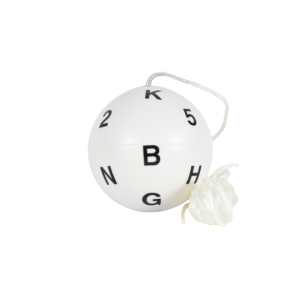
The Marsden Ball – White is a lightweight foam ball on a string used to train smooth pursuits, fixation, and hand–eye coordination; clinicians swing it in predictable paths while patients track, call out letters/targets, or tap it. The high-contrast white surface is easy to see (and to mark with letters or patterns), making it ideal for binocular control, timing/rhythm work, and vestibulo-ocular integration in clinic or supervised home programs.
Product Code: JVMBW
SKU: JVMBW -
Flipper, Vision Therapy
Confirmation Flipper -/+ 1.50D
The Confirmation Flipper ±1.50 D is a near-vision lens flipper used to train and check accommodative facility—how quickly and accurately a patient can change focus. With equal plus/minus lenses on a flip handle, it’s perfect for timed near tasks (letters/words) to confirm performance and track progress over visits.
Product Code: JVCF1.50
SKU: JVCF1.50 -
Occluder, Vision Therapy
Single Pinhole Occluder
Single Pinhole Occluder is a clinical diagnostic tool used during visual acuity testing to help determine whether reduced vision is mainly due to refractive error or possible ocular pathology. The small central pinhole limits peripheral light rays and allows the patient to view through a narrow aperture, often improving vision when refractive correction is required.
Product Code: JVSPO
SKU: JVSPO -
Accomodation, Vision Therapy
Hendrickson Lifesaver Card White Single
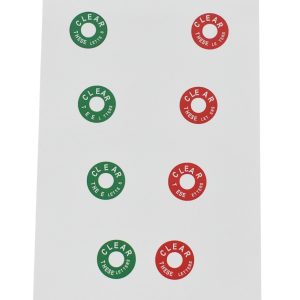
The Hendrickson Life Saver Cards – White are opaque free-fusion targets with high-contrast “lifesaver” rings that train vergence (convergence/divergence), stereo awareness, and anti-suppression—all without special glasses. The solid white backing boosts visibility and reduces background distractions, making fusion easier for beginners while you vary spacing/orientation to build range and facility.
Product Code: JVHLW
SKU: JVHLW